The Bipolar Biography Project
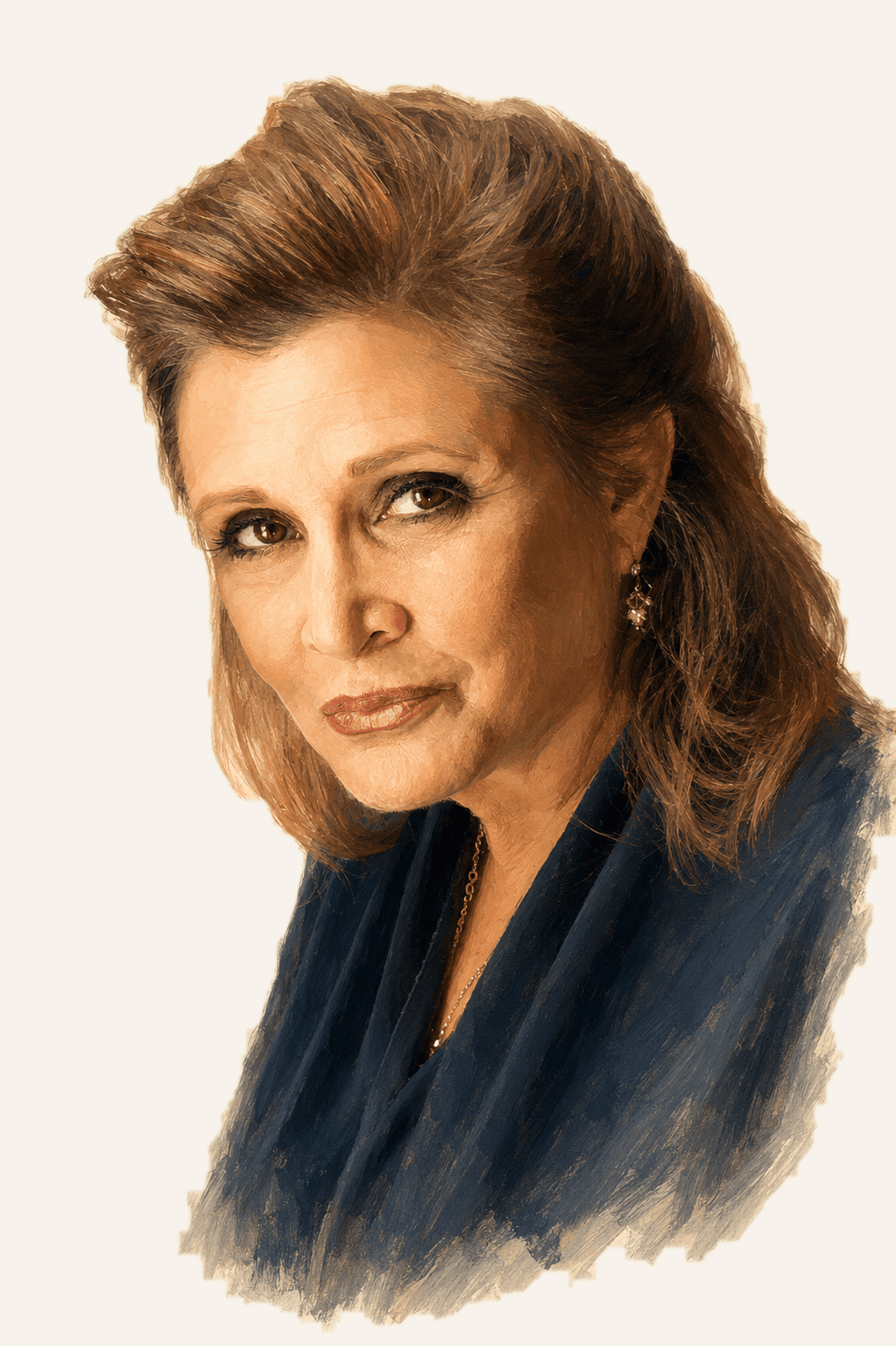
Painted portrait of Carrie Fisher
Photo: Riccardo Ghilardi · CC BY-SA 3.0 · Cropped and modified by The Bipolar Biography Project

Carrie Fisher

ActorWriterAdvocateUnited States1956–2016

ActorWriter

AdvocateUnited States

1956–2016

Bipolar disorderSelf-disclosed[1]

Carrie Fisher was an American actor and writer best known for playing Princess Leia in the Star Wars films. She also built a substantial career as a novelist, memoirist and screenwriter, including Postcards from the Edge, Wishful Drinking and The Princess Diarist. Fisher spoke publicly and repeatedly about living with bipolar disorder and became a highly visible advocate for reducing stigma around serious mental illness. [8][10]

More people like Carrie Fisher

Career and work

Fisher made her film debut in Shampoo (1975) and became internationally known two years later as Princess Leia Organa in Star Wars. She returned to the role throughout the original trilogy and decades later in Star Wars: The Force Awakens and The Last Jedi. Her other film and television work included Hannah and Her Sisters, When Harry Met Sally... and Catastrophe. [8]

Alongside acting, Fisher developed a substantial career as a writer and screenwriter. Her 1987 novel Postcards from the Edge was adapted into a 1990 film from her own screenplay, and she went on to publish novels and memoirs including Surrender the Pink, Wishful Drinking and The Princess Diarist. She also became a highly sought-after Hollywood script doctor, doing uncredited rewriting on films including Sister Act, The River Wild and The Wedding Singer. [8]

What has been publicly discussed

  • Fisher said she was first diagnosed with bipolar disorder at age 24, but she did not accept the diagnosis at the time. Because she was still using drugs, she questioned whether clinicians could reliably distinguish bipolar disorder from the effects of substance use. At 28, after becoming sober, she was diagnosed again and began to accept that she had bipolar disorder. [1]
  • Fisher went on to discuss the diagnosis openly in interviews, books and public appearances, making her experience with bipolar disorder a significant part of her later public advocacy. [10]
  • Fisher described mania as initially exhilarating. She said it could bring intense confidence, rapid thoughts, little need for sleep and a sense that her ideas were unusually important or achievable. At other times, that energy became difficult to control and led to impulsive behaviour. She contrasted this with depressive periods in which her energy and ability to function could fall dramatically. [2][1]
  • She also publicly described a severe episode in 1997 involving deep depression followed by a psychotic break and psychiatric hospitalization. Fisher recalled being awake for six days and experiencing hallucinations and delusional beliefs while in hospital, including becoming convinced that events she watched on CNN were personally connected to her. [3][2]
  • Fisher continued to experience mood episodes later in life and said that people close to her sometimes recognized changes in her mood before she did. She spoke about bipolar disorder as an ongoing and unpredictable part of her life rather than something that simply disappeared. [6]
  • After accepting the bipolar diagnosis at 28, Fisher took lithium for about a year. She later said that she disliked how it made her feel and stopped taking it, but subsequently returned to psychiatric medication to help control her moods. [1]
  • Fisher also underwent electroconvulsive therapy (ECT) for severe depression after other treatments had not provided sufficient relief. She spoke openly about the stigma surrounding ECT but said that, in her own case, she found it “very effective.” She later received maintenance ECT for a period as well. [4][5]
  • Fisher did not describe bipolar disorder as something she had permanently overcome. In a 2010 interview, she said it remained “an unpredictable element” in her life, but that she had become better at knowing what to do when symptoms emerged. She also said that friends and other people close to her sometimes recognized changes in her mood before she did. [6]
  • She described managing her mental health through professional treatment and support from other people. Fisher emphasized that coping with serious mental illness was not something she believed people should have to do alone, pointing to medication, therapy and community as important resources in her own life. [7]
  • Fisher became a prominent advocate for reducing stigma around bipolar disorder and other mental illness, using her own experiences openly in interviews, books and public appearances. In 2016, while receiving an Outstanding Lifetime Achievement Award in Cultural Humanism at Harvard, she said she had never been ashamed of her mental illness and noted that parents sometimes told children struggling with a diagnosis that “Princess Leia is bipolar too.” Harvard said she was recognized in part for her efforts to destigmatize mental illness. [10]
  • She also encouraged people with bipolar disorder to seek support and connect with others who shared similar experiences. In an advice column published shortly before her death, Fisher told a young reader with bipolar disorder that community could provide both perspective and comfort, and described living with the illness as an ongoing challenge that people should not have to face in isolation. [9]

“We have been given a challenging illness, and there is no other option than to meet those challenges.”

Carrie Fisher [9]
Sources and other resourcesExpand to view the sources used in this profile and resources to learn more.

Sources used for this profile

The following sources contain information that supports the claims made on this page.

  1. Fresh AirRemembering ‘Star Wars’ Actress Carrie Fisher

    A long-form interview covering Fisher’s bipolar diagnosis, her initial rejection of it, substance use, experiences of mania and depression, lithium treatment and how she came to accept the diagnosis.

    podcast or transcript
  2. Psychology TodayInterview: The Fisher Queen

    Covers Fisher’s severe episode involving depression, prolonged sleeplessness, psychosis, hallucinations, delusional beliefs and psychiatric hospitalization.

    interview
  3. CBS News, 2004Carrie Fisher’s open book

    Supports the dating of Fisher’s psychotic break to 1997 and provides additional background on her public discussion of bipolar disorder.

    book or publisher page
View all 10 sources
  1. Beliefnet / bp MagazineAn interview with Carrie Fisher

    Includes Fisher’s description of bipolar disorder as an unpredictable part of her life and her discussion of recognizing and managing changes in mood.

    interview
  2. TIME10 Questions for Carrie Fisher

    Includes Fisher’s perspective on living with mental illness and the importance of treatment and support.

    article or webpage
  3. The Guardian, 2016Carrie Fisher obituary

    Provides biographical and career information, including her work as Princess Leia, novelist, memoirist, screenwriter and Hollywood script doctor.

    book or publisher page
  4. The Guardian, 2016Carrie Fisher gives advice on living with bipolar disorder

    Fisher’s own advice to a reader with bipolar disorder, including her perspective on stigma, community, support and living with a serious mental illness. It provides the quotation used in the profile.

    profile or biography

Learn more

Recommended books and other resources about Carrie Fisher and their experiences.

More people like Carrie Fisher

The Bipolar Biography Project is an educational project. We document what people have said publicly and provide sources for transparency. We do not provide medical advice.

Profile status: Published