The Bipolar Biography Project
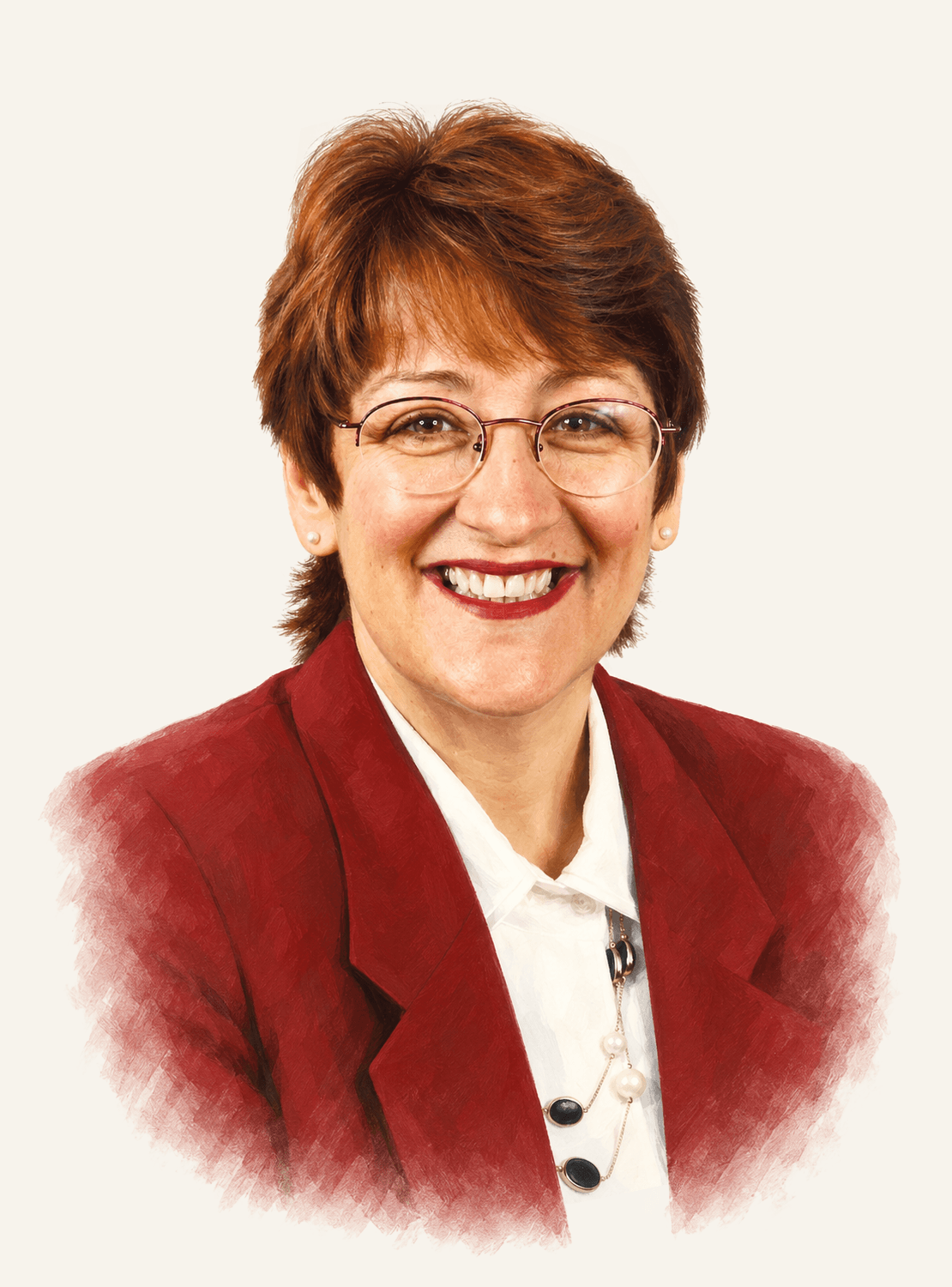
Painted portrait of Lynn Rivers
Original: Lynn Nancy Rivers
Lynn Rivers Red Jacket.jpeg
CC BY-SA 3.0
Painted adaptation; background changed to #f7f3ec by The Bipolar Biography Project.
Adaptation shared under the same license.
Full image attribution details

Lynn Rivers

PoliticianUnited States

PoliticianUnited States

Bipolar disorderSelf-disclosed[1]

Lynn Rivers is a former U.S. representative from Michigan who served four terms in Congress from 1995 to 2003. Before entering Congress, she served on the Ann Arbor Board of Education and in the Michigan House of Representatives. [2]

More people like Lynn Rivers

Career and work

During her four terms in Congress, Rivers served on the House Science Committee throughout her tenure, on the Budget Committee for her first three terms, and on the Education and the Workforce Committee in her final term. Her legislative work included environmental policy, campaign and lobbying reform, labor protections, and student-loan issues. [2]

After leaving Congress, Rivers moved into teaching political science. She has taught at the University of Michigan, where her courses have focused on Congress, relations between the legislative and executive branches, and campaigns and elections. [3]

What has been publicly discussed

  • Rivers was diagnosed with bipolar disorder at age 21. During her first campaign for Congress in 1994, she publicly acknowledged the diagnosis on a call-in radio program after rumors circulated that she was having a nervous breakdown. She later continued to speak openly about having bipolar disorder while serving in Congress. [1]
  • Rivers has described experiencing wide swings in mood beginning in early adulthood. At times she was highly active and productive, while depressive periods could become so severe that she stayed in bed for weeks. She also recalled periods when she slept as much as 20 hours a day and others when she became intensely angry without an apparent reason. [1][4]
  • Rivers has said that she worked with a psychiatrist for about 12 years to find a combination of medications that effectively stabilized her mood. She has also described psychotherapy as an important part of her treatment, helping her understand her feelings and learn how to function when well. [5]
  • Rivers said that she had been symptom-free since 1991 after years of recurring episodes. She has described maintaining her health as an ongoing process, including continuing to monitor her condition even during long periods of stability. [6][4]
  • Rivers used her position in public life to challenge stigma around mental illness. She spoke to patient and advocacy groups, participated in the 1999 White House Conference on Mental Health, and argued that elected officials should be willing to acknowledge their own use of mental-health treatment rather than only support it in the abstract. [6][1][2]
  • In 1998, NAMI recognized Rivers for her public disclosure and efforts to reduce stigma, describing her as a longtime advocate who had worked on mental-health issues in Michigan before entering Congress. [7]

“Yes, I am manic depressive; I am taking medication; and I am a member of the House of Representatives and good at my job.”

Lynn Rivers [1]
Sources and other resourcesExpand to view the sources used in this profile and resources to learn more.

Sources used for this profile

The following sources contain information that supports the claims made on this page.

  1. Roll Call“Life After Congress: Lynn Rivers”

    A retrospective interview covering Rivers’s bipolar diagnosis, her public disclosure during the 1994 campaign, mood episodes, treatment, advocacy, and life after Congress.

  2. U.S. House of Representatives, History, Art & Archives“RIVERS, Lynn Nancy”

    Official congressional biography covering Rivers’s education, political career, committee assignments, legislative work, and public discussion of bipolar disorder.

  3. University of Michigan, Department of Political Science“Lynn N. Rivers”

    Faculty biography describing Rivers’s political-science teaching and courses on Congress, the presidency, campaigns, and elections.

View all 7 sources
  1. Clinton White House Archives“June 9, 1999”

    Contemporary account of Rivers’s participation in the White House Conference on Mental Health and her discussion of treatment, monitoring her health, and stigma.

Learn more

Recommended books and other resources about Lynn Rivers and their experiences.

More people like Lynn Rivers

The Bipolar Biography Project is an educational project. We document what people have said publicly and provide sources for transparency. We do not provide medical advice.

Profile status: Published