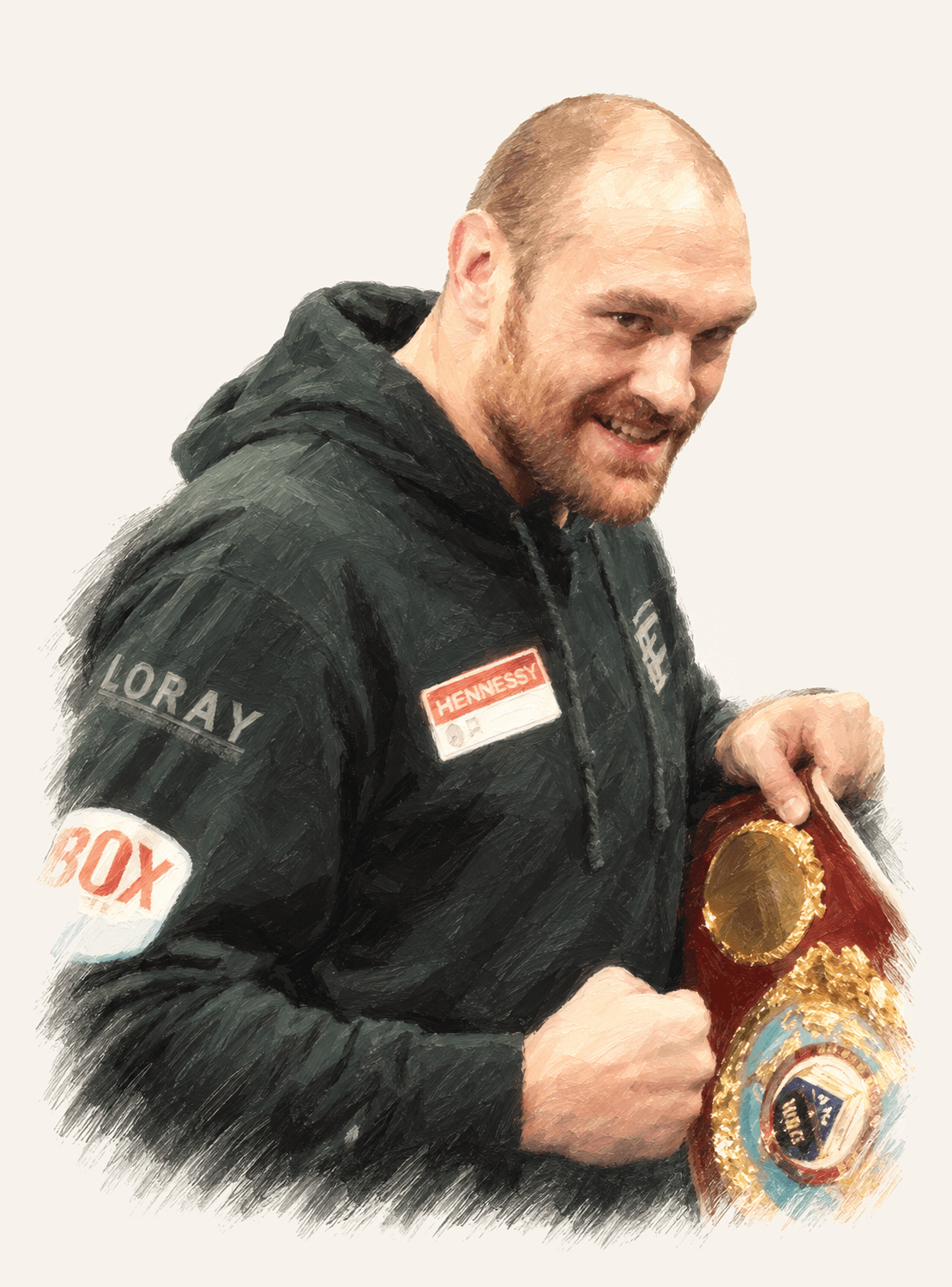
Tyson Fury - 2016-04-30.jpg
CC BY-SA 4.0
Painted adaptation; background changed to #f7f3ec by The Bipolar Biography Project.
Adaptation shared under the same license.
Full image attribution details
Tyson Fury
BoxingUnited Kingdom
Tyson Fury is a British heavyweight boxer who defeated Wladimir Klitschko in 2015 to become unified world heavyweight champion. He later returned after more than two years away from competition and won the WBC heavyweight title in 2020. [2]
Career and work
Fury turned professional in 2008 and rose through the heavyweight division before defeating Wladimir Klitschko by unanimous decision in 2015. The victory ended Klitschko’s long championship reign and gave Fury the WBA, IBF and WBO heavyweight titles. [2]
After returning to boxing, Fury fought Deontay Wilder to a draw in 2018 and defeated him in their 2020 rematch to win the WBC heavyweight title. He won their third fight in 2021 and subsequently defended the title against Dillian Whyte and Derek Chisora. [2]
What has been publicly discussed
- In 2016, Fury publicly said he had been told he had a form of bipolar disorder and described himself using the older term “manic depressive.” He discussed the condition while speaking about a severe period of depression and his withdrawal from boxing. [1]
- Fury has described a severe depressive period after winning the heavyweight championship in 2015. He said he stopped training, lost interest in boxing and reached a point where he did not want to live. During this period, he also described heavy drinking and cocaine use. [1]
- He later recounted driving his Ferrari at high speed toward a bridge while intending to end his life, before deciding not to go through with it. [3]
- Fury has said that he first sought professional help for his mental health in 2016. He has described seeing a psychiatrist and later working with a psychologist as he came to understand and manage his difficulties. [5][3]
- He has also described exercise and routine as central to managing his mental health. In 2023, he said he relied on regular training, a healthy lifestyle, structure and short-term goals from day to day. [5]
- Fury has also said that his Christian faith played an important role in helping him change direction during his lowest period. [3]
- In 2017, as he prepared for a return to boxing, Fury said he had moved on from the “dark and scary place” he had been living in and described depression as the hardest fight of his life. He returned to professional competition in June 2018 after more than two years away. [2][4]
- Fury has continued to present his mental health as something requiring ongoing attention rather than as permanently resolved. In 2023, his wife Paris said his difficulties were less severe than they had once been, while describing continuing periods of low mood and withdrawal. [5]
- Fury has become a prominent advocate for greater openness about mental health. He has said that speaking publicly about his own struggles was one of the best things he did and has encouraged others, particularly young athletes, to seek help rather than keep problems to themselves. [5][6]
- He has continued to discuss mental health publicly because he believes his experience may be useful to other people facing similar difficulties. [5]
“This isn’t just a fight for Tyson Fury, this is a fight for depression, mental health problems.”
— Tyson Fury [7]
Sources and other resourcesExpand to view the sources used in this profile and resources to learn more.
Sources used for this profile
The following sources contain information that supports the claims made on this page.
ESPN“Tyson Fury admits to ‘lots of’ cocaine use; talks suicidal thoughts, mental health issues” Fury discusses bipolar disorder, depression, suicidality, drinking and cocaine use.
ESPN“Tyson Fury: Biography, record, fights and more” Career overview covering his championship fights and major opponents.
The Guardian“Tyson Fury: I ‘gave up on life’ during depression and absence from boxing” Covers his suicidal crisis, psychiatric help, substance use and faith.
View all 7 sources
The Guardian“Tyson Fury: battle with depression my hardest fight but I’ve turned corner” Covers his state of mind as he began preparing for a return.
The Guardian“At home with Tyson Fury” Covers ongoing management, training, routine and Paris Fury’s observations.
ESPN“Tyson Fury opens up on mental health struggles” Covers Fury’s mental-health advocacy and public discussion of his experiences.
ESPN“Tyson Fury back in his element after signing with Frank Warren” Source of the quotation used in “In their own words.”
Learn more
Recommended books and other resources about Tyson Fury and their experiences.
- Behind the Mask: My AutobiographyTyson Fury
Fury’s autobiography covers his boxing career, mental-health crisis and return.
- The Furious MethodTyson Fury
Fury’s book about physical and mental wellbeing, including exercise, diet, routine and goals.
- At Home With The FurysNetflix
Reality series following Fury’s family life, career and ongoing mental-health difficulties.