The Bipolar Biography Project
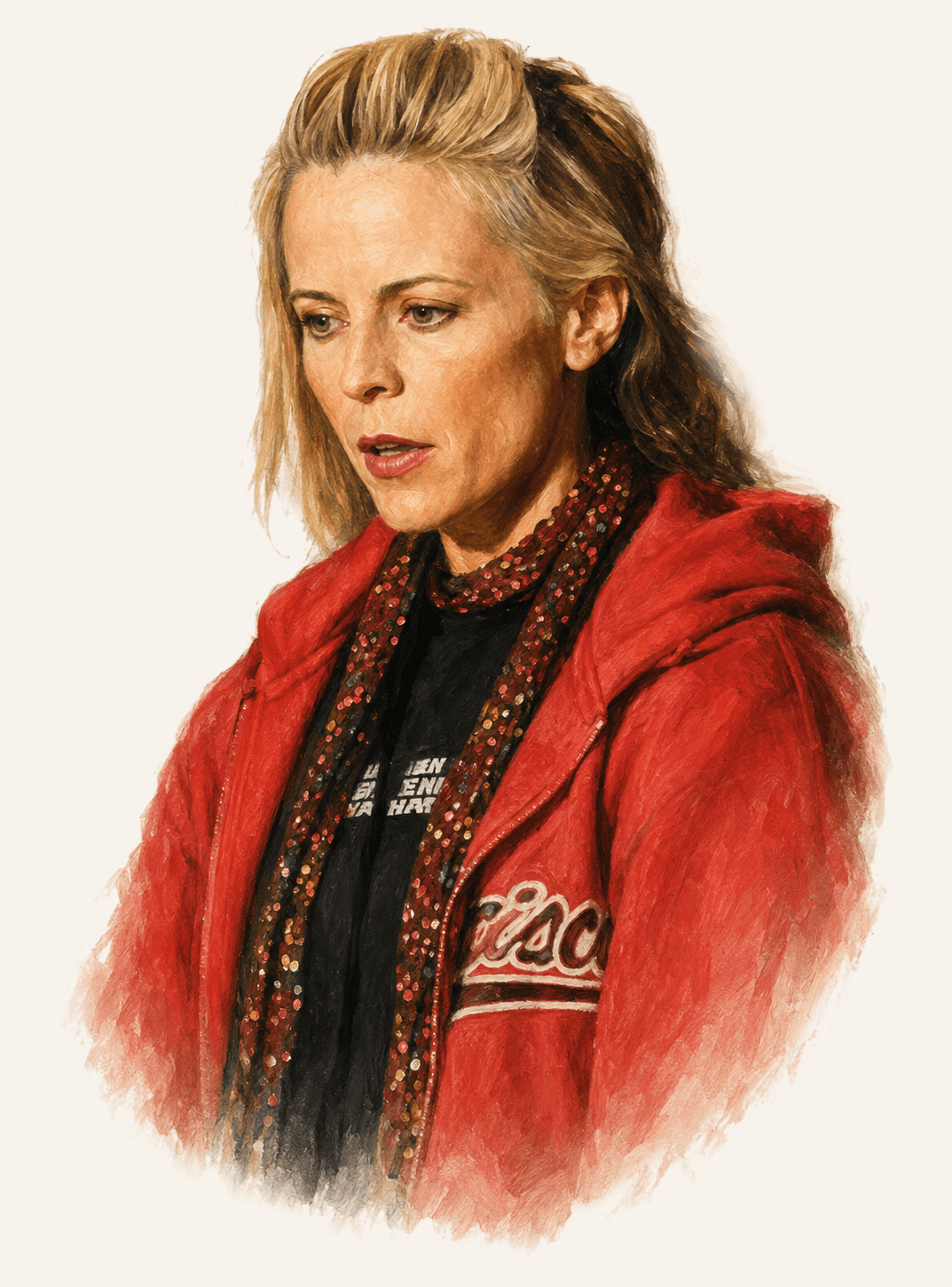
Painted portrait of Maria Bamford
Original: Reed Kavner
Maria Bamford (3630937323).jpg
CC BY-SA 2.0
Painted adaptation; background changed to #f7f3ec by The Bipolar Biography Project.
Adaptation shared under the same license.
Full image attribution details

Maria Bamford

ComedianActorUnited States

ComedianActor

United States

Bipolar II disorderSelf-disclosed[1]

Maria Bamford is an American stand-up comedian and actor known for highly personal comedy that often draws on her own life. Her work includes the Netflix series Lady Dynamite, the specials Old Baby and The Special Special Special!, and extensive voice acting in series including BoJack Horseman, Big Mouth and Adventure Time. [2]

More people like Maria Bamford

Career and work

Bamford has built her career around stand-up comedy, often using character voices and unconventional performance formats. Her comedy releases include The Special Special Special!, Old Baby, Weakness Is the Brand and Local Act. [11][2]

She starred in the two-season Netflix series Lady Dynamite, a surreal comedy inspired by her own life. Bamford has also done extensive voice work, with credits including BoJack Horseman, Adventure Time, The Legend of Korra, Big Mouth and Bob’s Burgers. [3][2]

What has been publicly discussed

  • Bamford has said she was diagnosed with bipolar II disorder around 2011, when she was 40, during a period that included severe depression and psychiatric hospitalization. She has described being surprised by the diagnosis and initially resisting the suggestion that she take a mood stabilizer, spend time in hospital and step away from work. [1]
  • She later began discussing the diagnosis openly in her stand-up, interviews and television work. Her Netflix series Lady Dynamite drew directly on the period when she stepped away from her career for treatment. [4]
  • Bamford has described severe depressive episodes, including periods when she felt unsafe being alone. In 2011, she was hospitalized three times for mental-health treatment and subsequently returned to Minnesota to live with her parents while recovering. [10][1]
  • She has also described hypomanic periods. Looking back on the period before her diagnosis, Bamford recalled that her psychiatrist noticed she was talking unusually fast and recommended a mood stabilizer. [1]
  • Bamford has also discussed longstanding anxiety and intrusive or obsessive thoughts, including unwanted thoughts about violence. [1][7]
  • Bamford has said that accepting medication became an important part of her improvement. Looking back, she said she believed earlier mood-stabilizer treatment might have allowed her to avoid some major depressive episodes. [1]
  • In a 2018 interview, Bamford said she was taking Depakote, Seroquel and Prozac and described bipolar-specific medication as having made a major difference for her. [5]
  • She has also described exercise, meditation, 12-step fellowships and support from friends and family as useful parts of self-care. [1]
  • Bamford has said that after finding a medication combination that worked for her, severe depression became much less frequent. In a 2016 interview, she said she had “rarely felt any sort of depression” in the years following her hospitalizations. [6]
  • Bamford has also emphasized that getting better can be an uncomfortable process and has encouraged people going through it to recognize that they are not alone. [7]
  • Bamford has used stand-up, interviews and Lady Dynamite to speak openly about bipolar II disorder, hospitalization and other mental-health experiences. She has said that seeing other public figures disclose bipolar disorder helped reduce her own shame about the diagnosis, and she has criticized using words such as “crazy” to shame people away from seeking help. [8]
  • She has also said that talking publicly about her breakdown made her feel more useful, while expressing reluctance to describe herself as an activist simply because mental illness is part of her work. [1][9]

“I’m sure had I been on [mood stabilizers] a lot earlier, I would have been able to miss out on a bunch of major episodes of depression.”

Maria Bamford [1]
Sources and other resourcesExpand to view the sources used in this profile and resources to learn more.

Sources used for this profile

The following sources contain information that supports the claims made on this page.

View all 11 sources

Learn more

Recommended books and other resources about Maria Bamford and their experiences.

More people like Maria Bamford

The Bipolar Biography Project is an educational project. We document what people have said publicly and provide sources for transparency. We do not provide medical advice.

Profile status: Published